IonQ Harmony
Retired in 2024
With an #AQ of 9, IonQ Harmony was our first commercially available quantum computer, and a first for the industry.

Why trapped ion technology?
Harmony uses an early version of IonQ’s trapped ion architecture, developed between 2018–2020. At launch in 2020, Harmony represented a breakthrough in gate fidelity for IonQ. Beyond Harmony, IonQ’s full technical roadmap aims to deliver the full suite of trapped ion advantages below.
.svg)
Highest gate fidelity
Ion qubits have achieved the lowest gate error rate of any quantum technology.
Ion qubits are identical and naturally quantum. When isolated from the environment around them, ion qubits can be manipulated with a high degree of accuracy. Since qubit gate operation error compounds through the depth of a quantum algorithm, even small errors can make results unusable. We believe that trapped ions are the best way to produce the high-quality qubits needed to build fault tolerant quantum computers.

All-to-all connectivity
Any qubit in the system can be directly entangled with any other qubit.
Thanks to all-to-all connectivity, IonQ’s trapped ion architecture offers unparalleled flexibility in algorithm design. Unlike the limited connectivity commonly found in superconducting architectures, trapped ion systems enable more accurate and more efficient circuits, improving algorithmic results.

Fully software configurable
IonQ’s trapped ion architecture can be configured to meet various computational demands.
Unlike other quantum technologies, trapped ion hardware is not limited by wiring or static qubit topology. Since our qubits are ions floating in space, the qubit structure, as well as the addressable control lasers, can be configured through IonQ’s proprietary control software. This control results in a system that can dynamically scale up or down based on customers needs.

Longest coherence times
Ion qubits have achieved the longest coherence times of any quantum technology.
Synthetic qubits, like superconducting loops, are fragile and only remain in their quantum state for a fraction of a second. Ions are naturally quantum and as a result, when left alone, remain in quantum states. This leads to longer coherence times and improved algorithm execution for longer circuits.
.svg)
Clear path to error correction
We believe trapped ions will require fewer total qubits for error correction compared to other quantum.
We believe qubits with higher fidelity will require fewer total qubits to create a single logical, error corrected qubit. IonQ’s approach to developing a fault tolerant quantum computer, which will require scales much larger than today’s biggest quantum computers, is to manufacture the highest quality qubits possible, thus limiting the total number of qubits needed in a system.

Highest Gate Fidelity
Ion qubits have achieved the lowest gate error rate of any quantum technology.
Ion qubits are identical and naturally quantum. When isolated from the environment around them, ion qubits can be manipulated with a high degree of accuracy. Since qubit gate operation error compounds through the depth of a quantum algorithm, even small errors can make results unusable. We believe that trapped ions are the best way to produce the high-quality qubits needed to build fault tolerant quantum computers.
Explore IonQ Harmony's unique system architecture
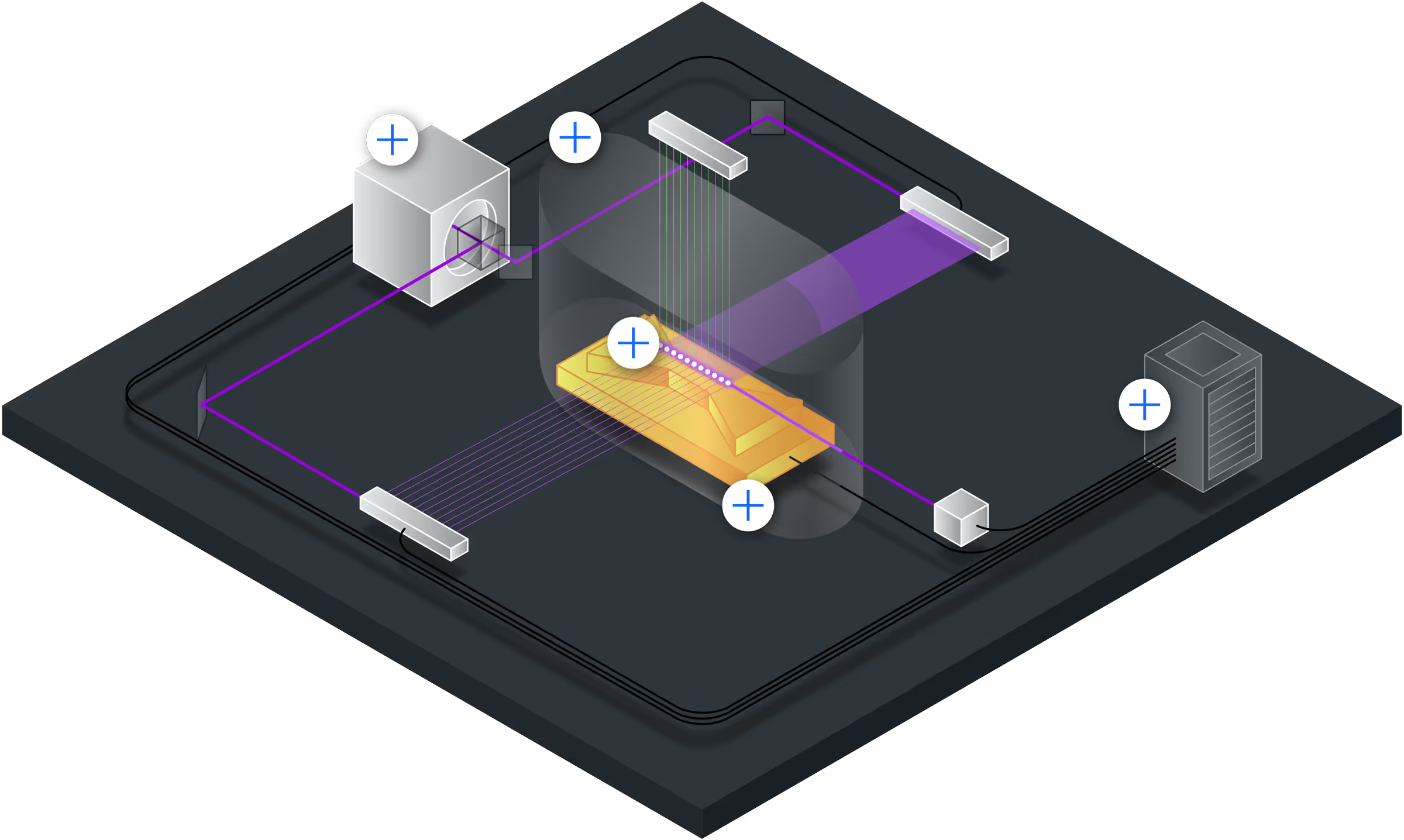
Harmony system
Learn more about Harmony’s quantum architecture by selecting system components from the list above or by clicking the plus signs on the image.
.avif)
Optimized performance
Harmony’s operating system was developed from the ground up, by IonQ, specifically for Harmony’s hardware architecture. This bespoke approach increases system performance and ensures we are getting the most from Harmony’s hardware.
- Optimized for IonQ hardware
- Circuit/task optimization built in
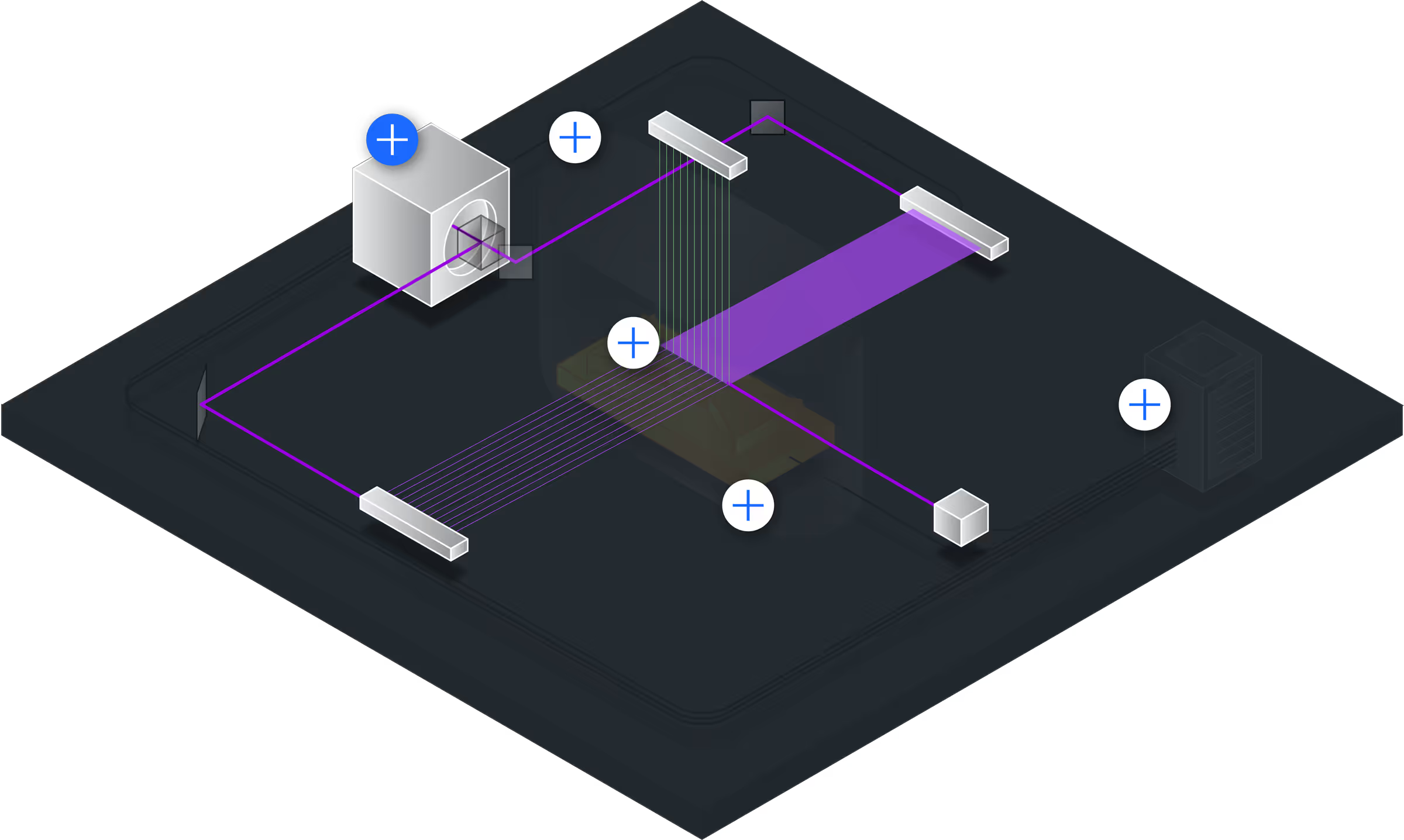
All-to-all connectivity
Harmony's optical and laser system features individual addressing beams for each qubit. This allows any two qubits to be entangled directly, improving overall algorithm performance.
- All-to-all qubit connectivity
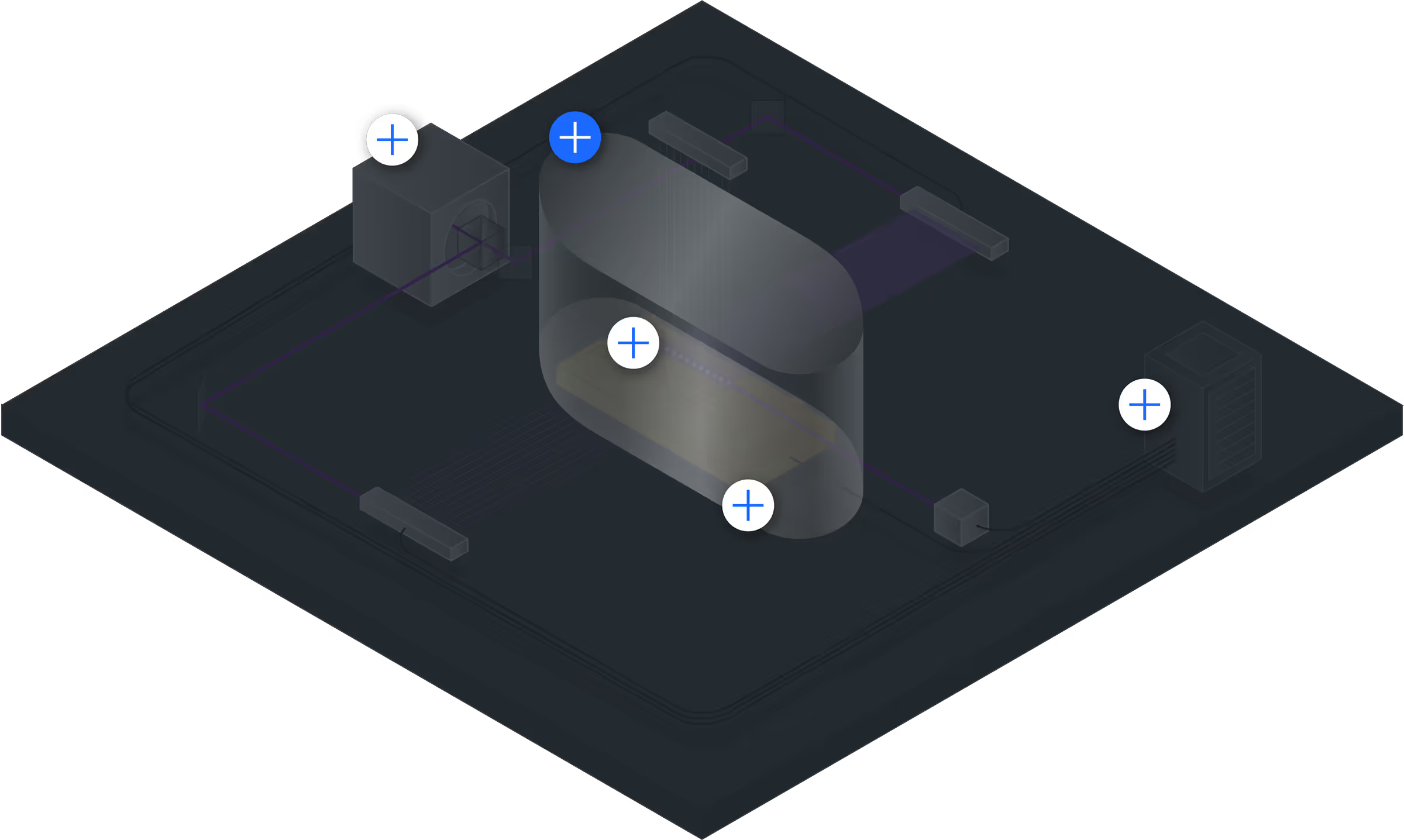
Qubit isolation
Harmony’s titanium chamber helps isolate the qubits from stray air molecules that can ruin computation. Careful electrical routing ensures a low-noise computational environment.
- Decreased noise, compared to previous chambers, improving system performance
- Improved mechanical stability, compared to previous chambers, resulting in higher gate operation fidelities

Improved gate operations
Harmony leverages a trap from our partners at Sandia Labs. Designed to rigorous standards, the trap captures the ions in a precise location in space.

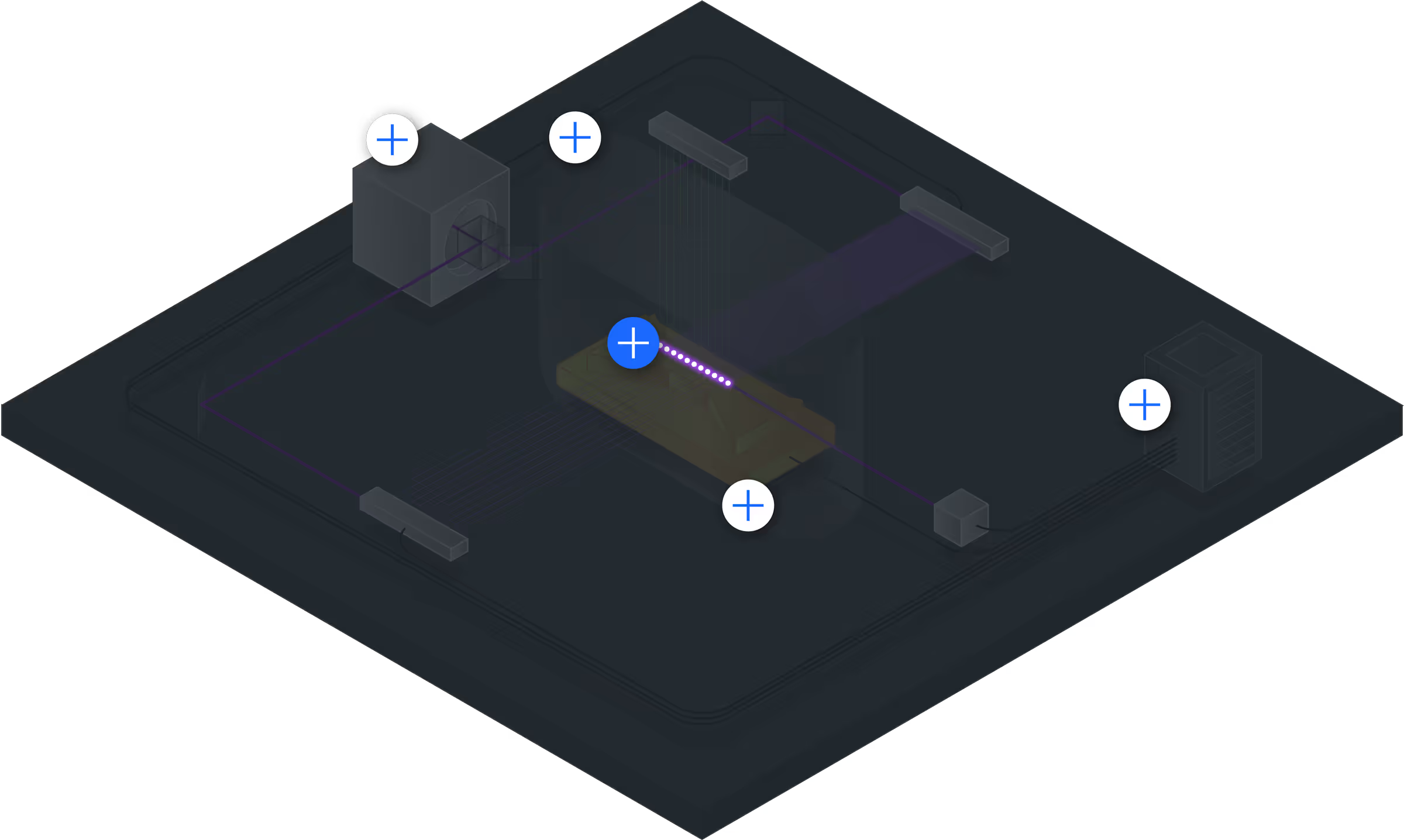
Long coherence times
Yb-171+ is well suited to quantum computing. Its electronic structure allows for efficient laser cooling together with high performance state preparation, measurement, and gate operations.
- Long coherence times
- High gate operation fidelities
Explore other quantum systems
IonQ Aria
Our universally accessible, high-performing flagship quantum system
IonQ Tempo
Our commercial advantage capable computer for production applications
IonQ Forte
Our highest performing, commercially available quantum system
IonQ Forte Enterprise
Our rack mountable, on-prem system for production readiness and hybrid workflows with #AQ 36 and 36 qubits
Compare systems
Explore and compare IonQ’s industry leading portfolio of quantum computers
Harmony
specifications
11
Qubit count
The number of physical qubits in the system. The closer #AQ is to qubit count, the higher quality the qubits in the system.
0.4%
1-Qubit gate error
This characterization of 1Q gate infidelity is the 1Q randomized benchmarking error rate, as measured by Clifford Randomized Benchmarking and described in this paper. Although we do not expect a significant discrepancy, for consistency with 2Q benchmarking, IonQ is beta testing using direct randomized benchmarking to measure 1Q error rate.
2.7%
2-Qubit gate Error
This characterization of Harmony 2Q gates was collected using a concatenated Mølmer-Sørenson gate technique described in this paper. IonQ is beta testing reporting 2Q randomized benchmarking error rates obtained via Direct Randomized Benchmarking. This will provide more accurate characterization, be easily reproducible by customers, and be capable of scaling as our systems get larger. Developers can pull the latest DRB snapshot for Harmony using our API.
0.18%
SPAM error
The average error introduced during state preparation and measurement. Harmony's SPAM error is about eighteen parts in ten thousand (0.18%), and our new Barium system can do about four in ten thousand. More on SPAM and Barium
10–100s, ~1s
T1 & T2 time
Two factors of the amount of time a qubit “stays a qubit,” T1 measures how long you can tell what’s a one vs a zero, and T2 measures phase coherence.
Not sure how to get started? IonQ’s Applications team can help.
The IonQ Application Team can support you on your Harmony journey. Quantum scientists can help you identify, test, and build quantum solutions for your business.
Get accessA pioneering quantum computer
Learn about world firsts on Harmony


Harness the world-changing power of quantum computing
Access our quantum systems on the cloud in as little as ten minutes, or contact our experts to discuss a custom partnership for your business.
Get started